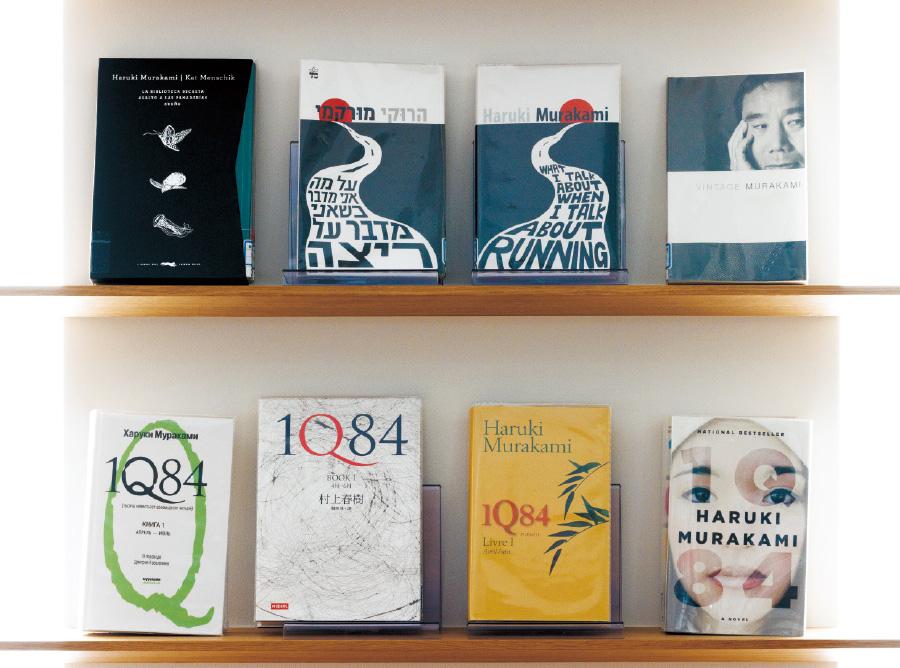
There’s a certain kind of reader who doesn’t just finish books, but forms a relationship with them. Over the years, I’ve found that kind of connection in the work of Haruki Murakami. His stories aren’t just narratives you follow, they’re spaces you enter. And at some point, without really planning it, I realized I had read everything he has written.
That moment didn’t feel like an ending. It felt like standing at the edge of a familiar city, knowing every street, yet sensing there was still more beneath the surface. So I decided to start over.
Why read Murakami again?
Murakami’s writing has a strange elasticity. The first time you read it, you’re often carried by atmosphere, the quiet surrealism, the characters who drift between reality and something just slightly out of reach. But on a second reading, something shifts.
You begin to notice patterns. Recurring themes. The way loneliness, memory, music, and identity weave themselves through completely different stories.
Books like Kafka on the Shore, 1Q84 or The Wind-up Bird Chronicles don’t give up everything at once. They unfold differently depending on who you are at the moment you read them. And that’s exactly the point.
Why English this time?
Reading Murakami again in English adds another layer to the experience.
Translation is interpretation. Even though Murakami’s works are originally written in Japanese, many readers first encounter him through translation. Revisiting these stories in English feels like stepping into a slightly altered version of the same dream, familiar, but with subtle differences in tone, rhythm, and nuance.
Sentences breathe differently. Dialogue lands in a new way. Even silence feels distinct. It’s not about which version is “better.” It’s about discovering how language reshapes meaning.
The comfort of the unresolved.
One of the reasons Murakami stays with me is his refusal to resolve everything neatly. There are always loose ends. Questions that linger. Worlds that remain slightly open. And strangely, that’s comforting.
In a world that constantly pushes for clarity and closure, Murakami allows ambiguity to exist without apology. His characters often don’t fully understand what’s happening to them, and neither do we. Yet somehow, it still feels complete.
Reading as a personal timeline.
Re-reading these books now, I’m not the same person I was when I first picked them up.
Back then, certain passages stood out. Now, entirely different moments resonate. It’s like the books haven’t changed, but I have, and that shift reveals new layers in the same text. That’s what makes this second journey so compelling. It’s not repetition. It’s rediscovery.
Starting again.
There’s something quietly powerful about going back to the beginning. Not because you missed something, but because you know there’s more to find. So here I am, starting again. Page one. Different language. Different perspective. Same author who somehow manages to make the ordinary feel surreal and the surreal feel deeply human.
And maybe that’s the real reason to read Murakami twice.
Not to understand everything.
But to understand it differently.


